Wines
About Us
Shop
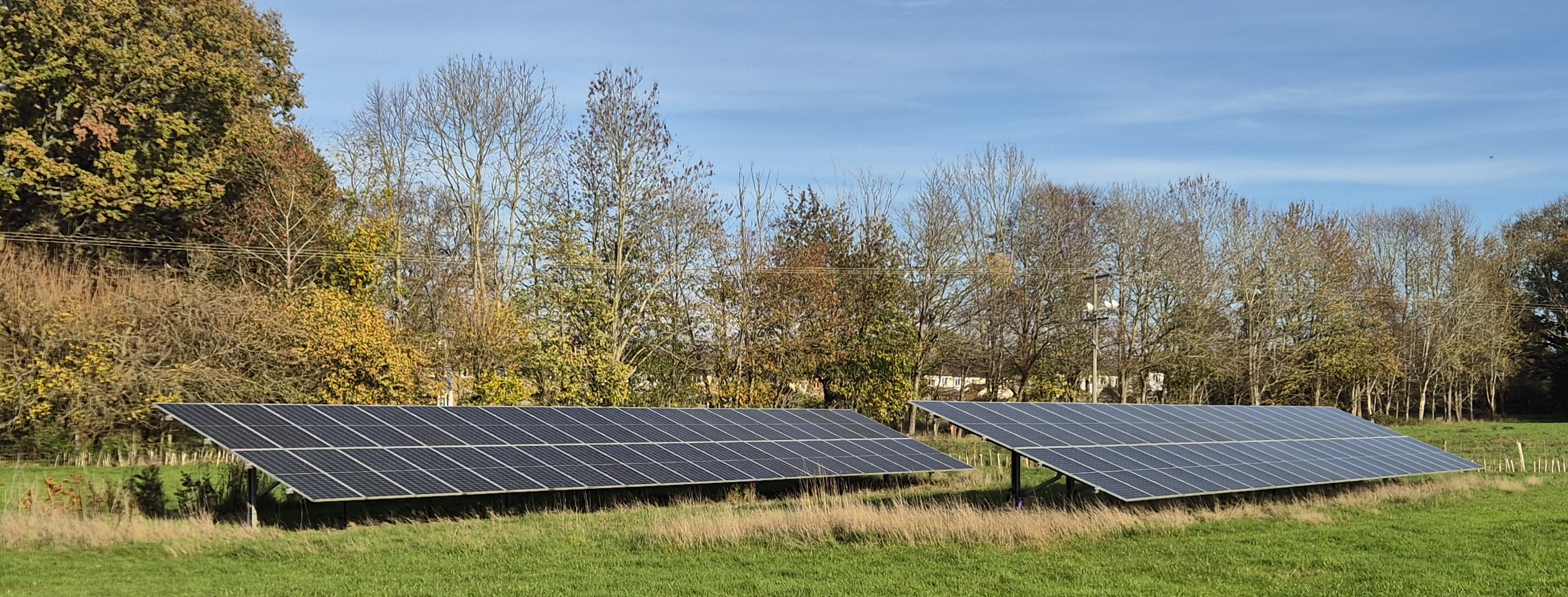
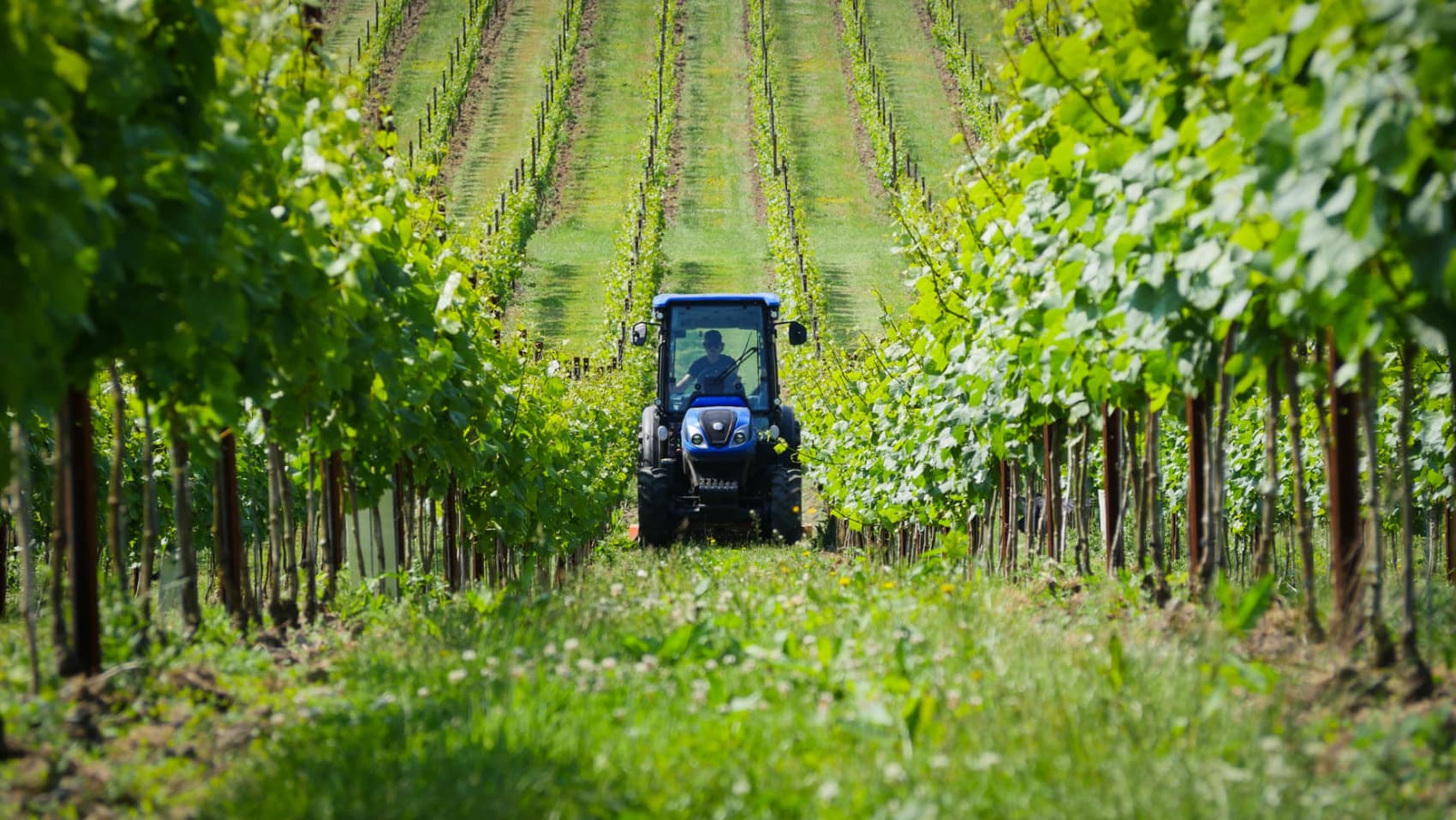
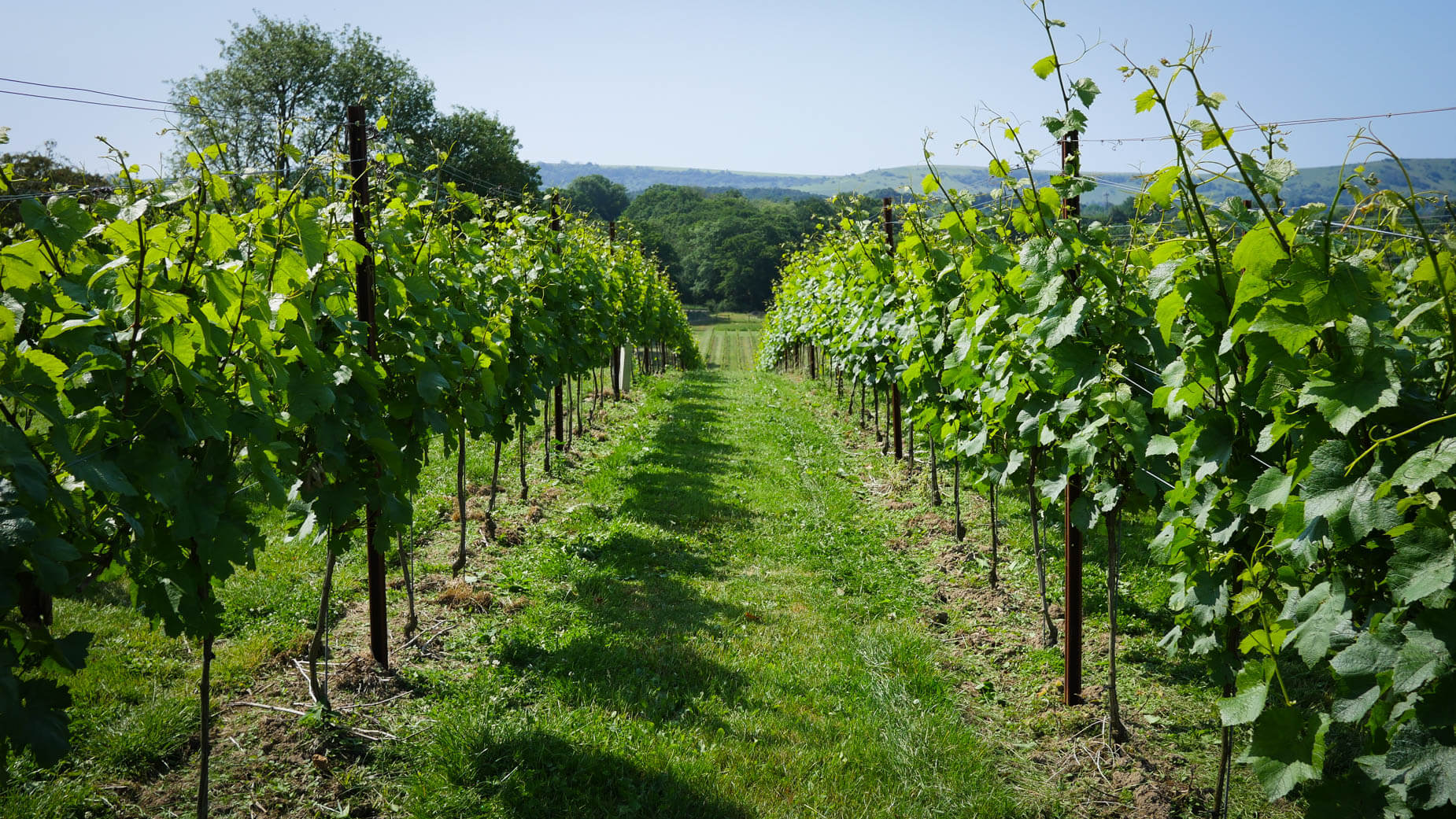
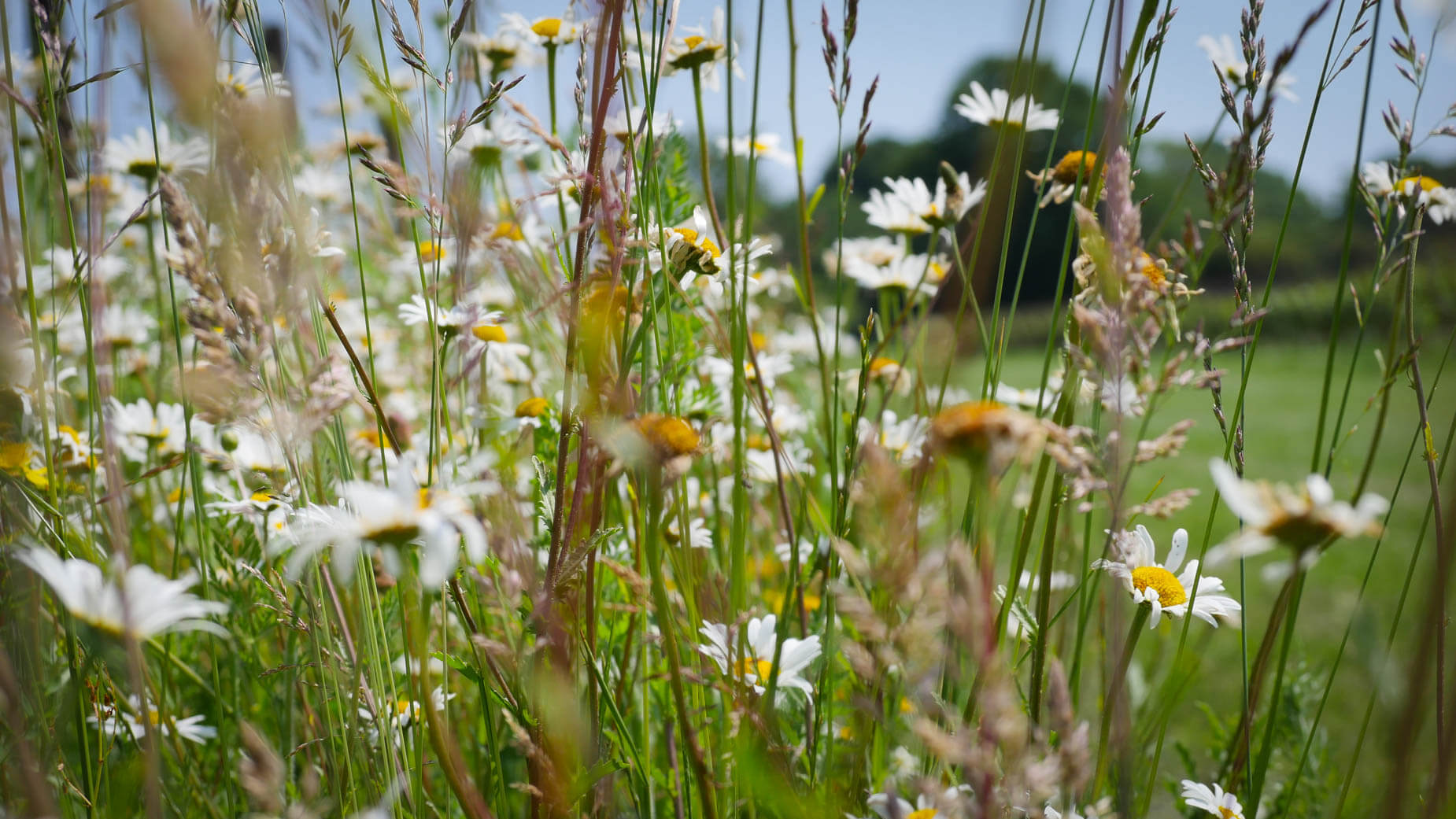
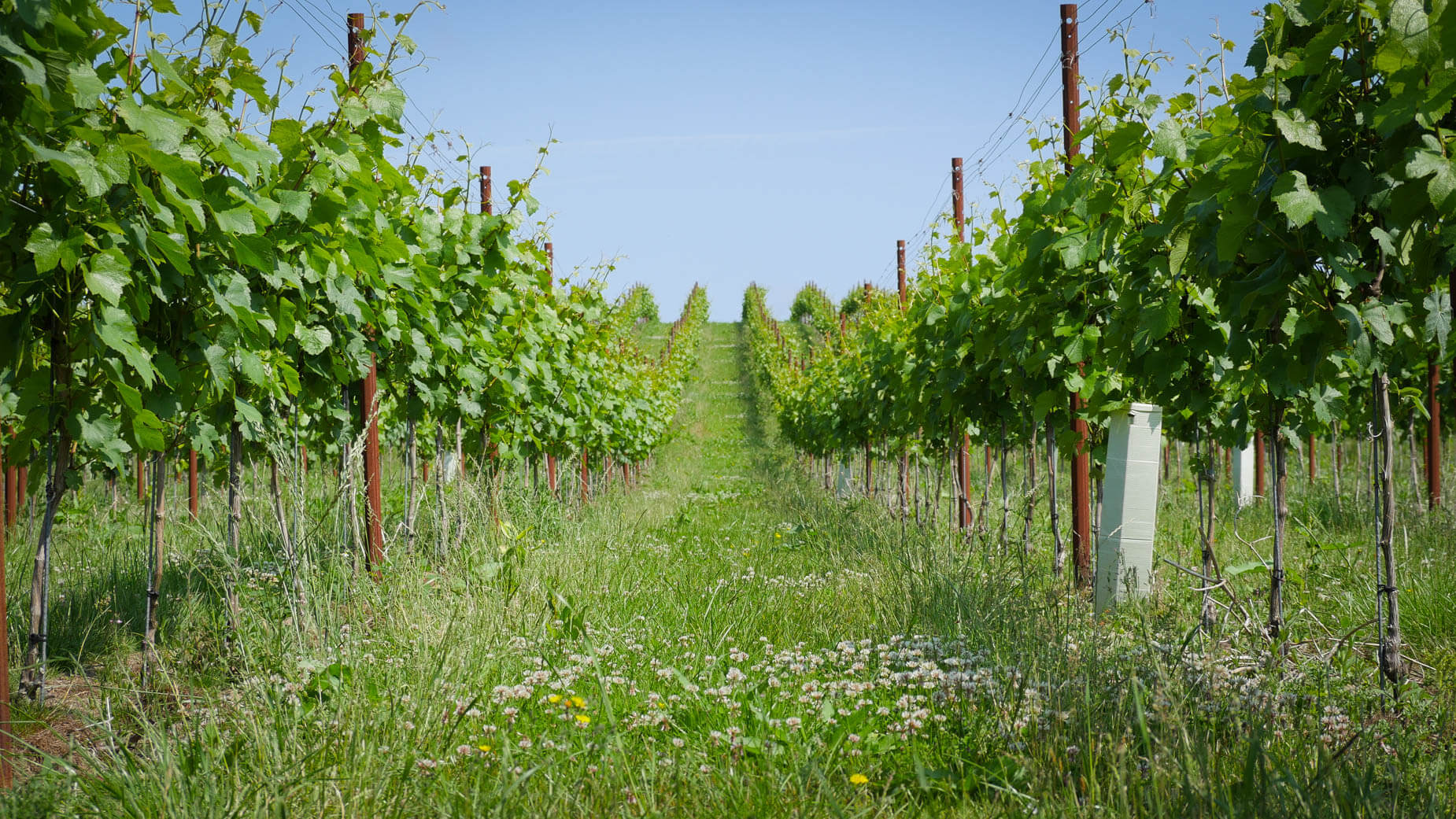
Our commitment to sustainability is seen throughout the farm. Solar panels across the site provide clean, renewable energy that powers the winery, vineyard equipment, and farm buildings — reducing our carbon footprint. A variety of trees across the site are essential to our biodiversity, providing natural shelter and linking woodland corridors across the farm. The woodlands connect habitats and support local wildlife. Wildflower banks attract pollinators, boost soil health, and bring life and colour to the vineyards.
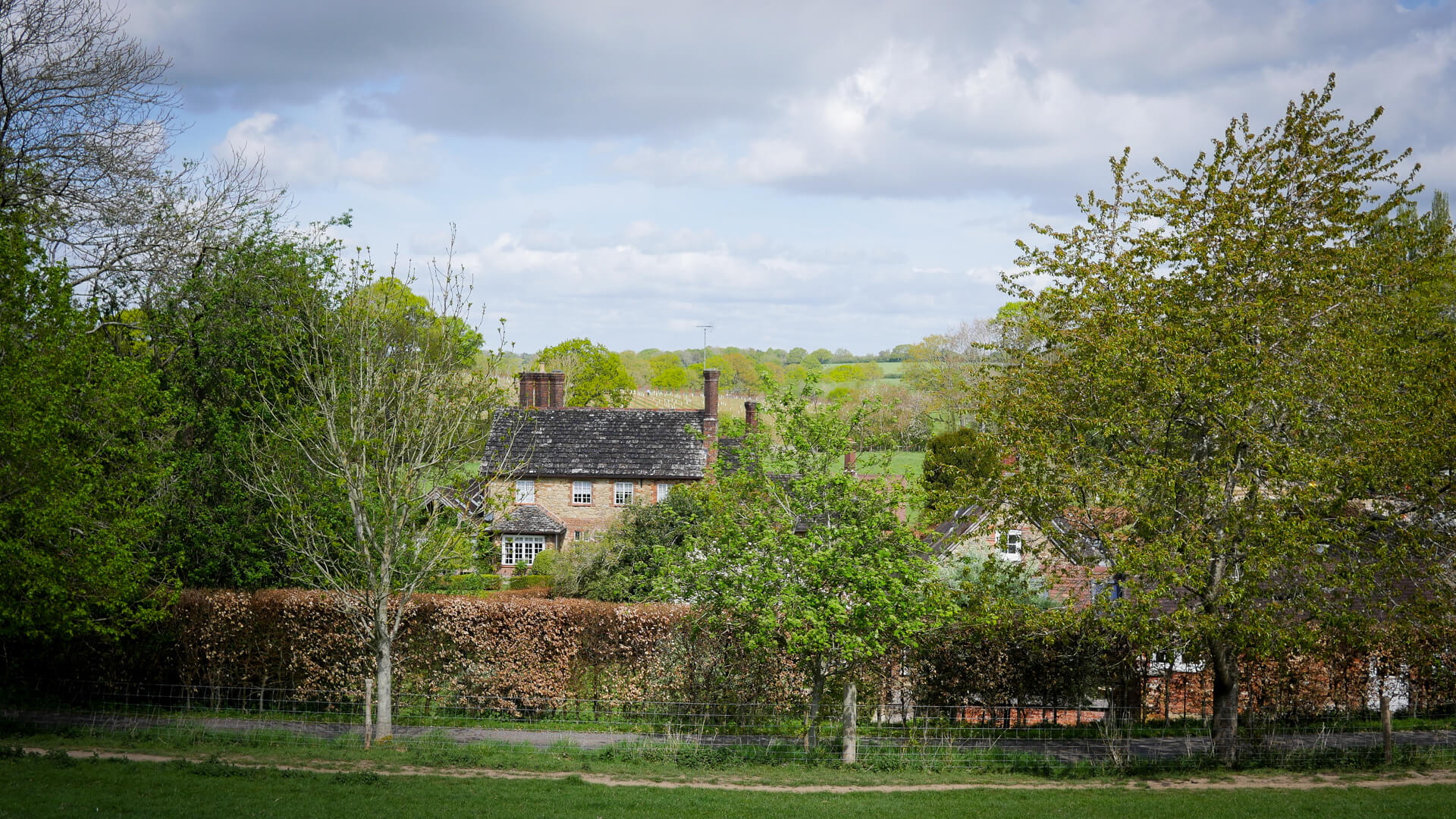
A historic centrepiece of the land, the farmhouse connects Abingworth’s past to its present. It’s not just a home — it’s a place of gathering, planning, and sharing the future of the vineyard. Sitting at the heart of Abingworth — not just geographically, but emotionally too — it’s where our journey began. Plans were scribbled over cups of tea, and from the kitchen window, we watched the vineyard grow row by row. Parts of the farmhouse date back to the 16th century, having survived a fire in 1900, and it holds secrets like a hidden priest hole — quiet echoes of a complex past. Nearby lies the farmhouse pond, where a Roman plug was once discovered at its depths — a subtle reminder of the ancient history beneath our feet. Today, the farmhouse remains a working family home and the quiet headquarters of our vineyard life — a place full of muddy boots, early mornings, and comfort.
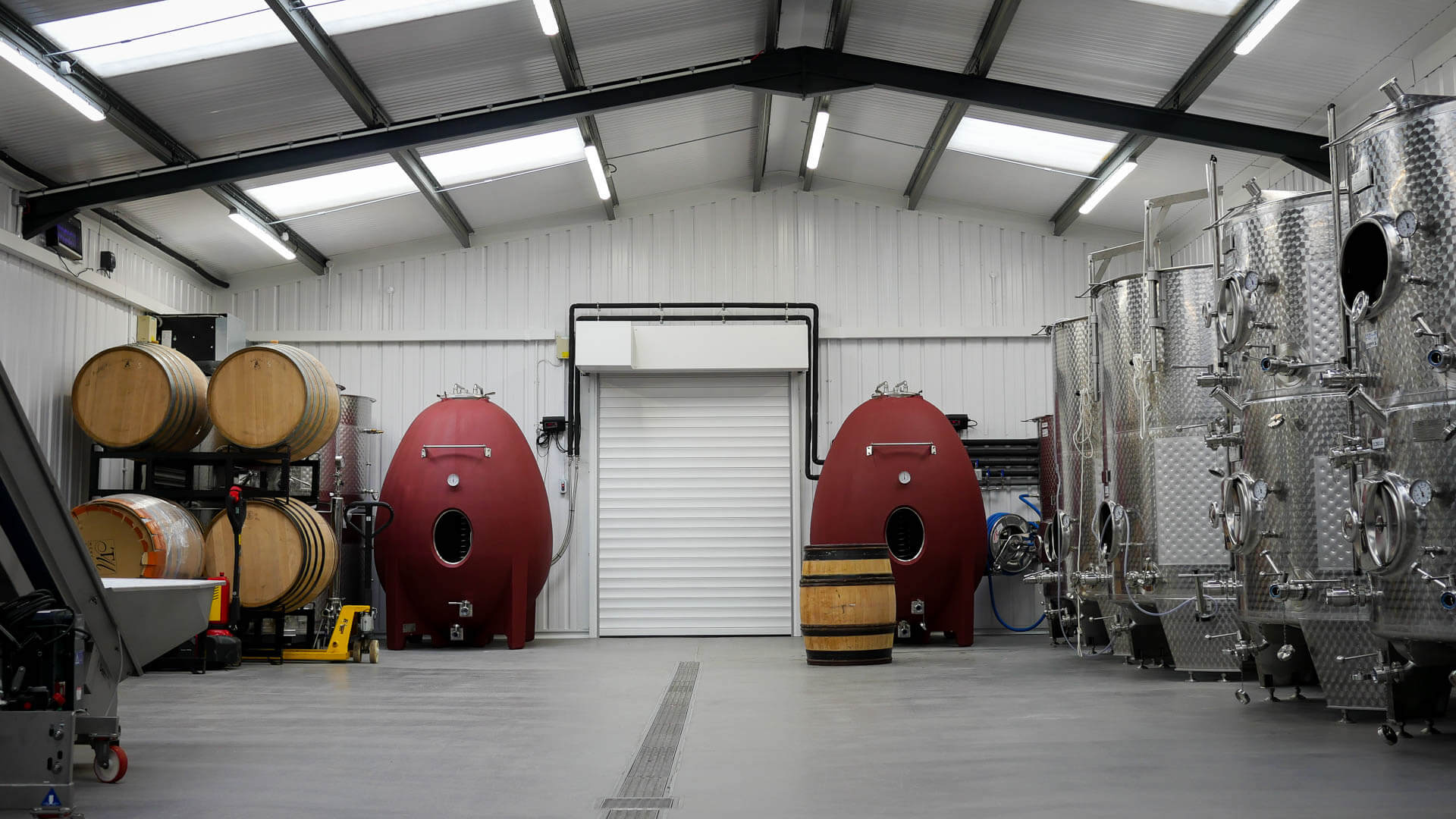
Once a barn that housed classic cars, the winery has been carefully converted and extended to support high-quality winemaking. It’s the engine room of our vineyard — where minimal intervention meets traditional techniques and modern technology. Inside, you’ll find temperature-controlled tanks, barrel storage, and a dedicated wine lab — all powered by solar energy from the farm. It’s a practical, busy space — especially during harvest — but also one of stillness, where each wine begins its journey and is given time to rest, evolve, and find its character.
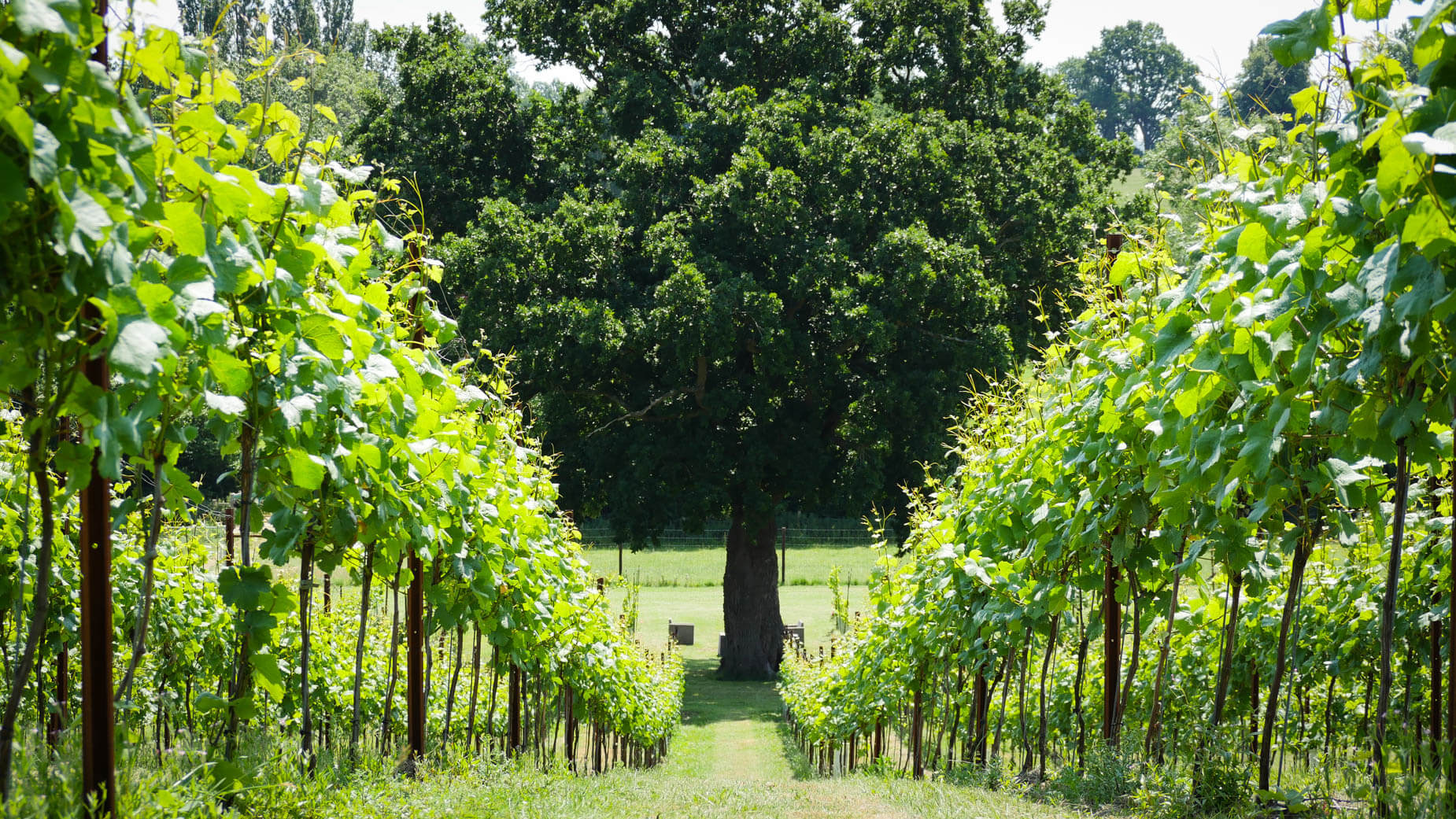
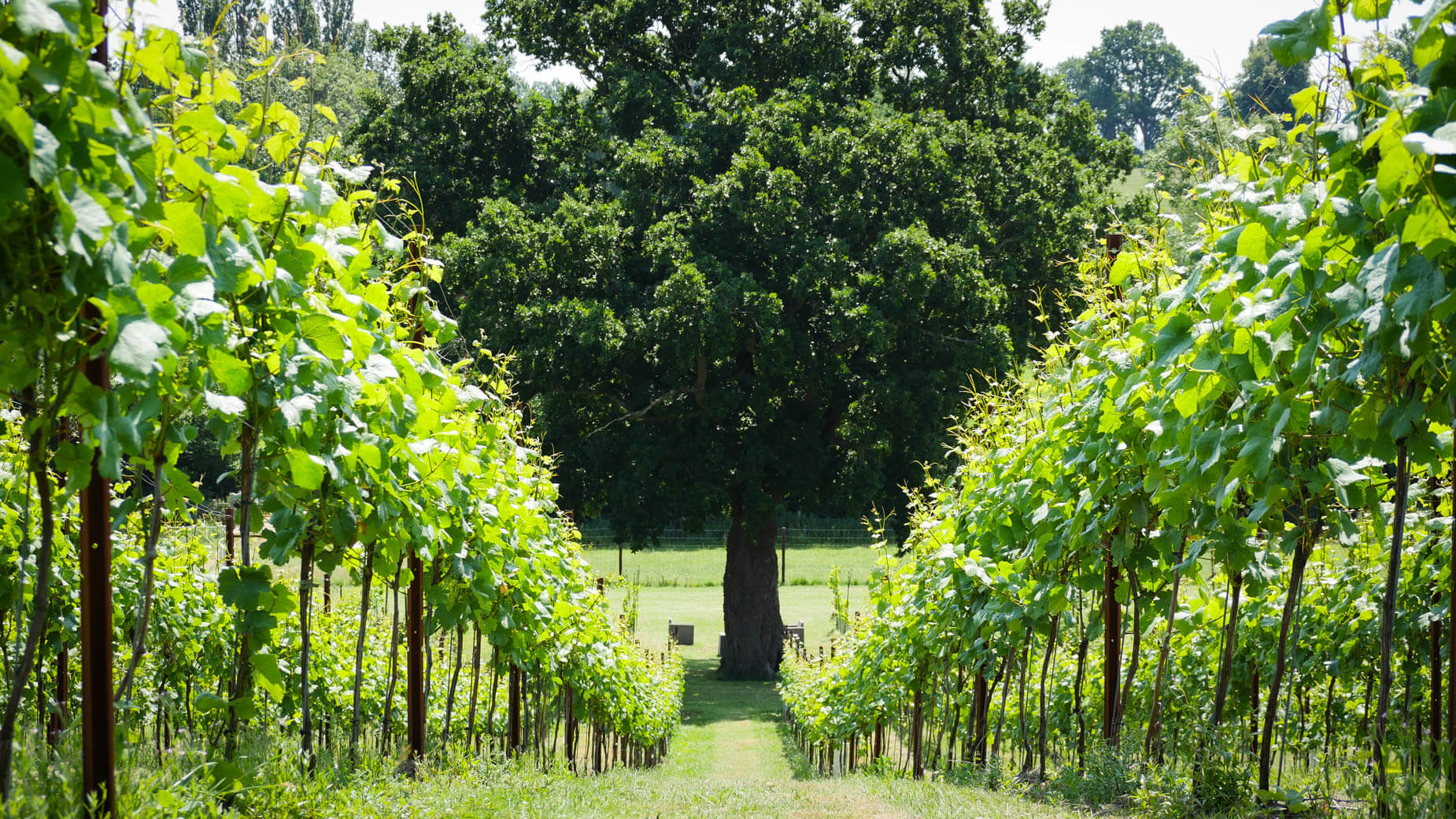
One of Abingworth’s most recognisable landmarks, this mature oak stands in the centre of our Pinot Noir vineyard on Tumbledown Hill — deliberately preserved when the vines were planted. It plays a quiet but important role: providing shade, supporting biodiversity, and contributing to the microclimate of the block. A visual marker through the seasons, it’s a reminder that our vineyard sits within a wider landscape.
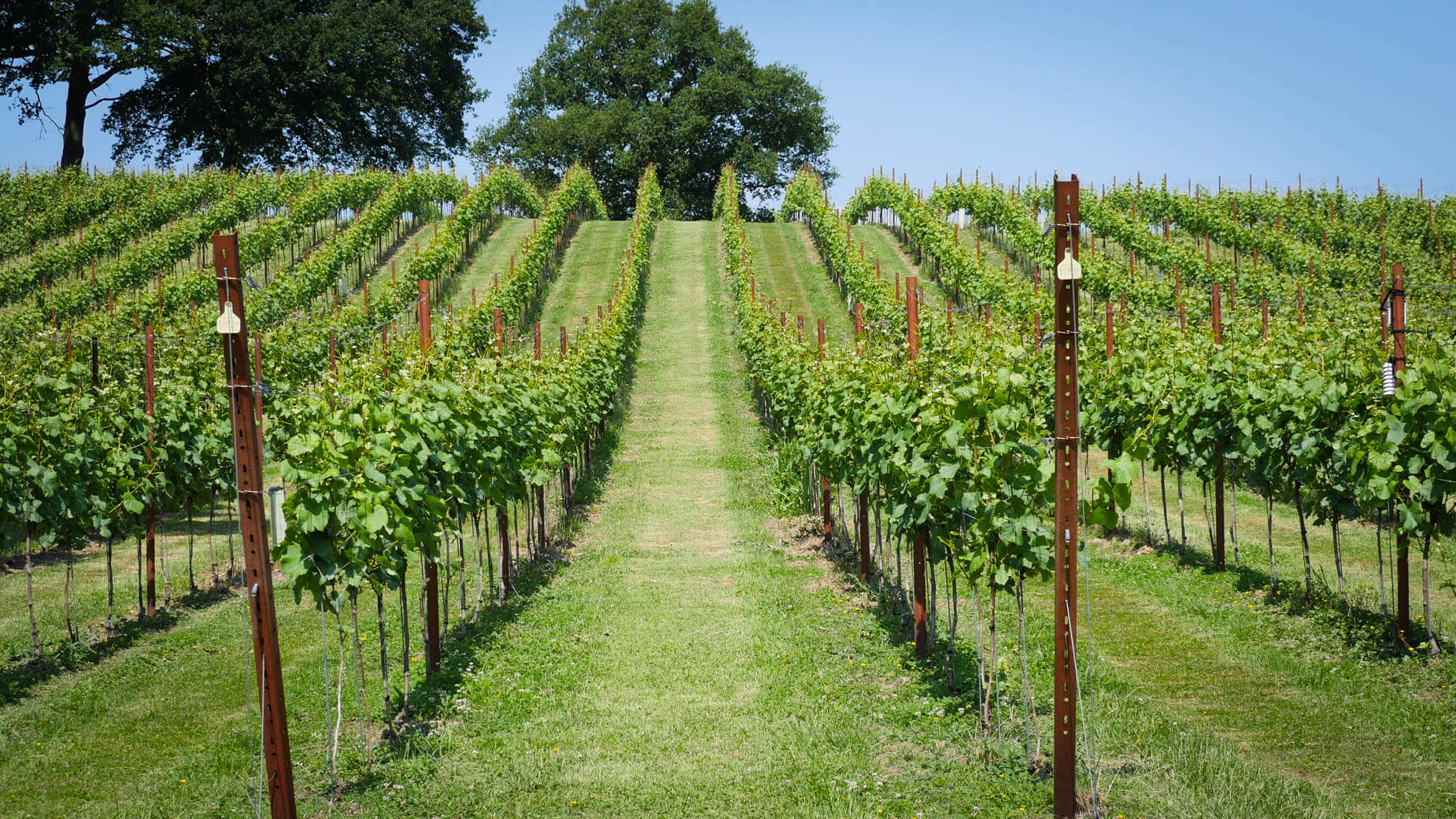
Area: 0.36 ha
Grape Variety: Pinot Noir
Clone: 521
Rootstock: SO4
Vine Count: 1447 Vines
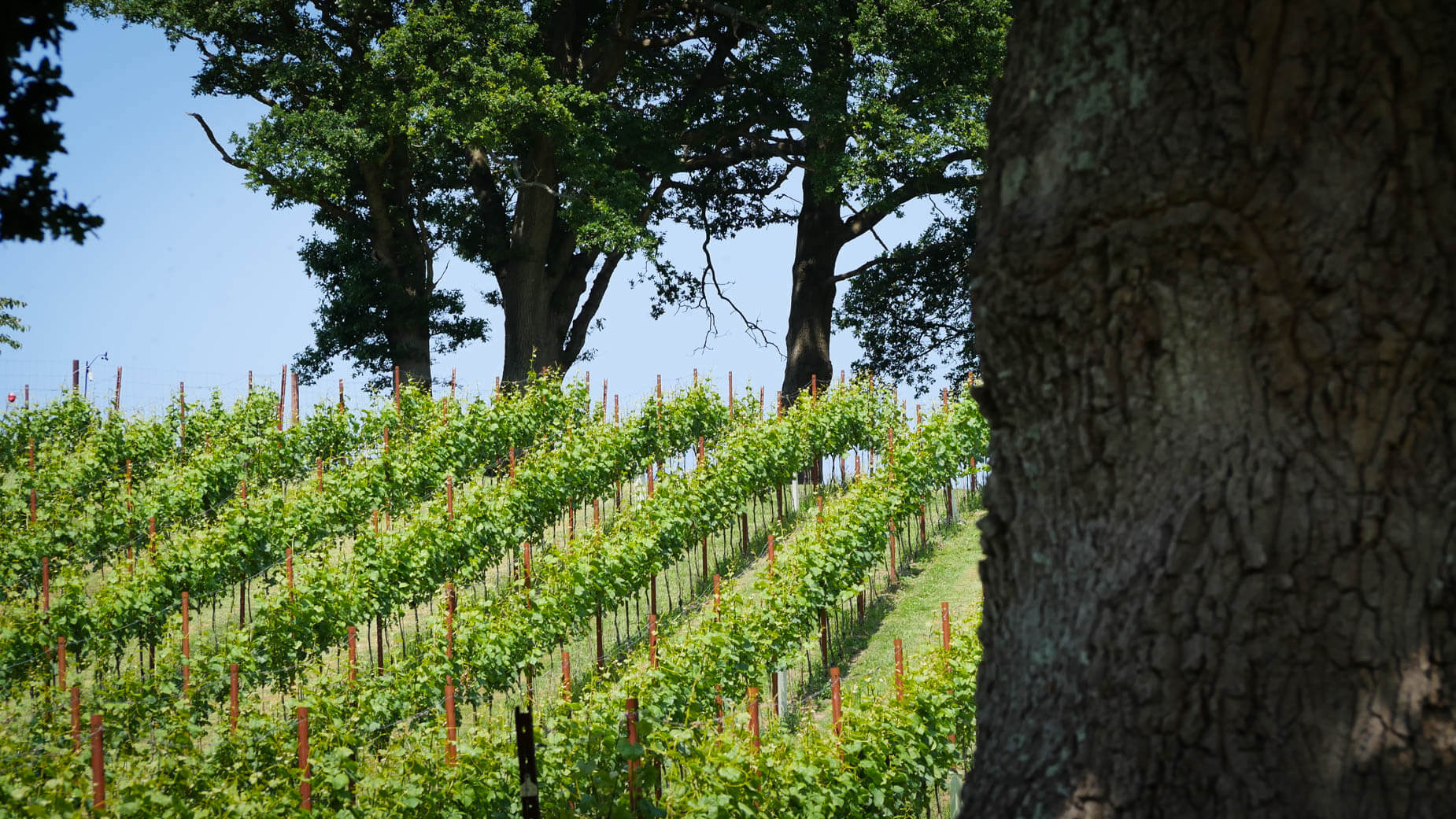
Area: 0.61 ha
Grape Variety: Pinot Noir
Clone: 115
Rootstock: 3309
Vine Count: 2480 Vines

Area: 0.51 ha
Grape Variety: Pinot Noir
Clone: GM2013
Rootstock: SO4
Vine Count: 2076 Vines
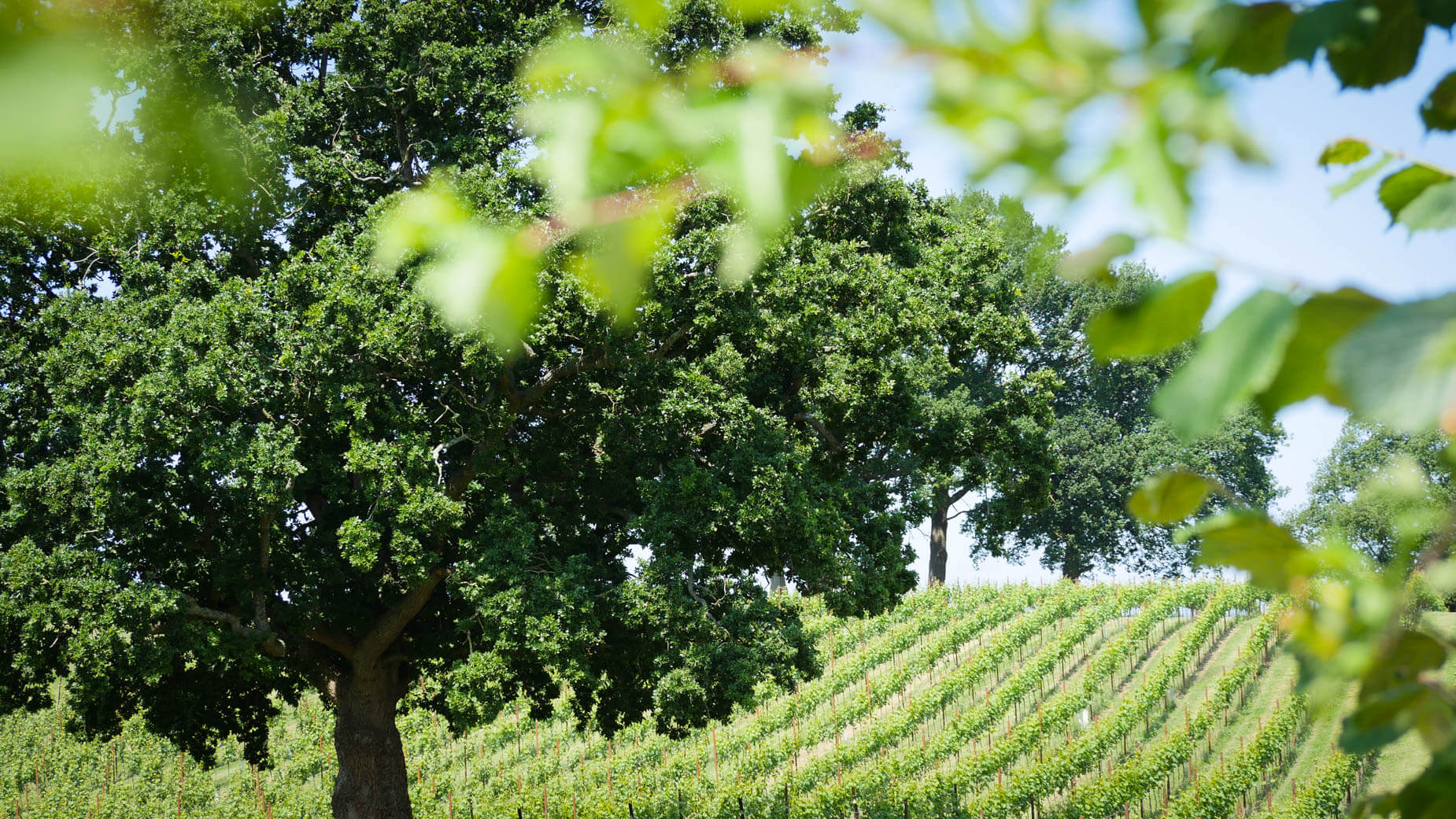
Area: 0.5 ha
Grape Variety: Pinot Noir
Clone: 777
Rootstock: 3309
Vine Count: 2051 Vines
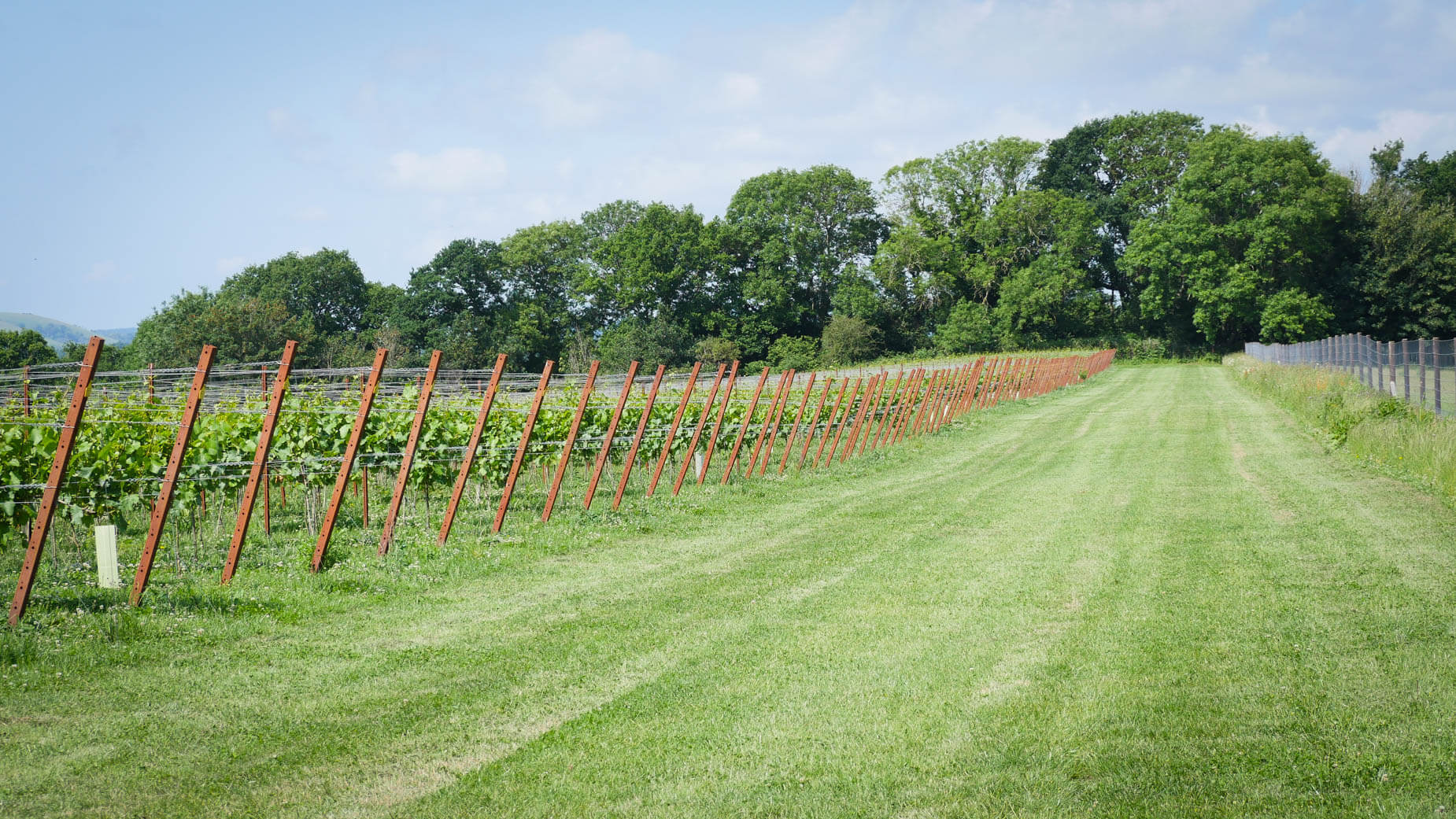
Area: 0.08 ha
Grape Variety: Chardonnay
Clone: 76
Rootstock: 41B
Vine Count: 323 Vines
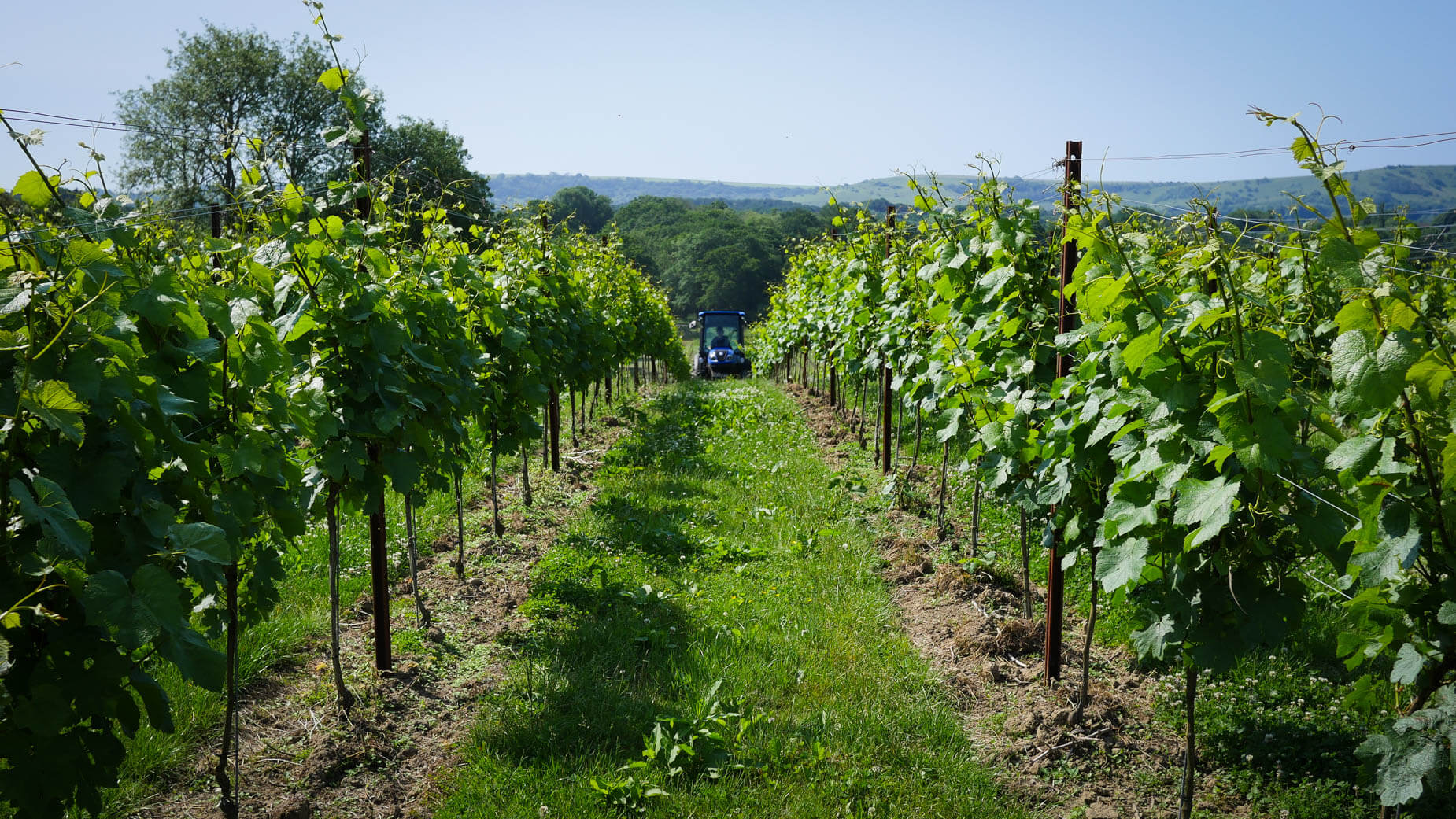
Area: 0.58 ha
Grape Variety: Chardonnay
Clone: 76
Rootstock: SO4
Vine Count: 2400 Vines
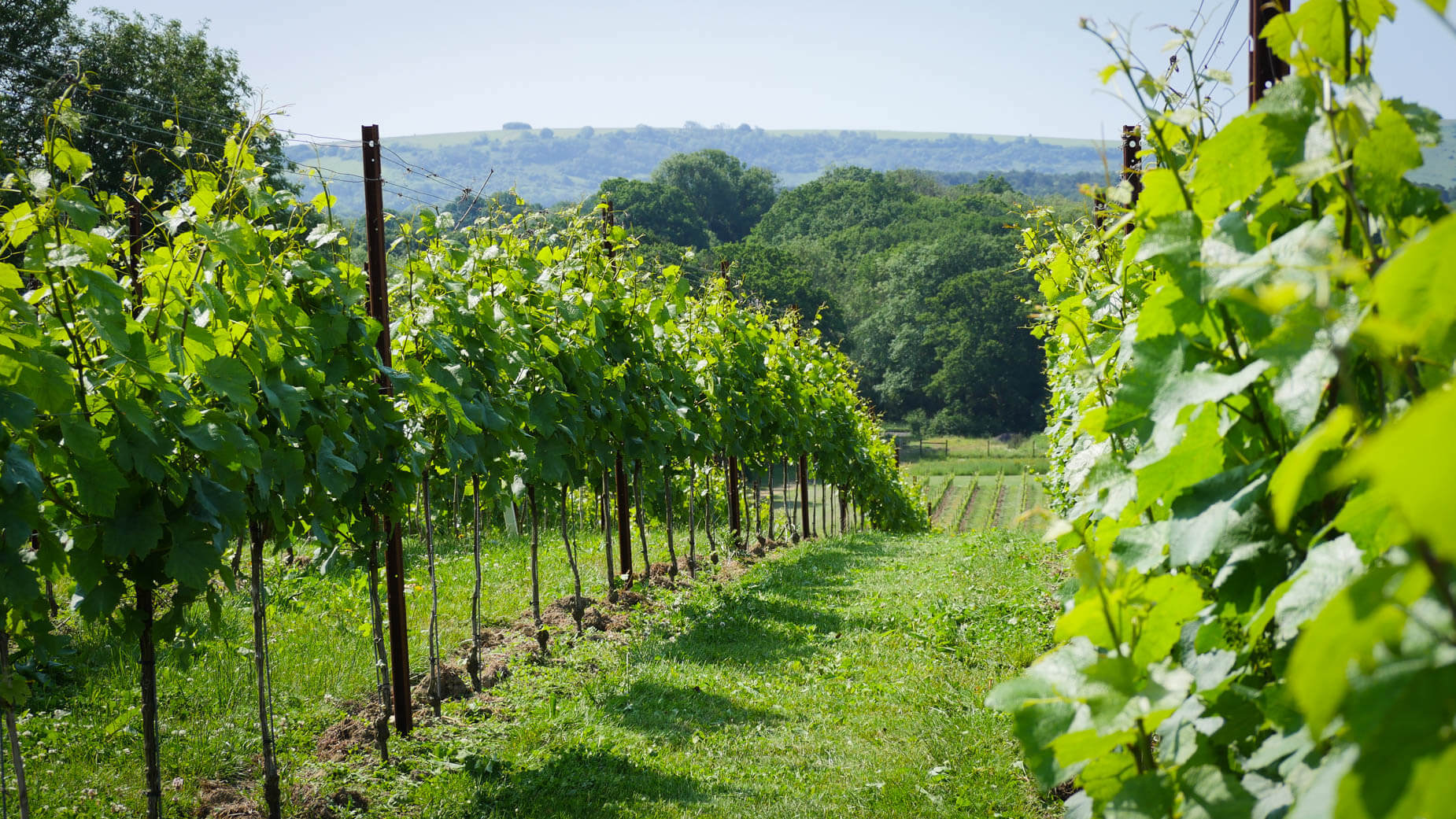
Area: 0.18 ha
Grape Variety: Chardonnay
Clone: 95
Rootstock: SO4
Vine Count: 736 Vines
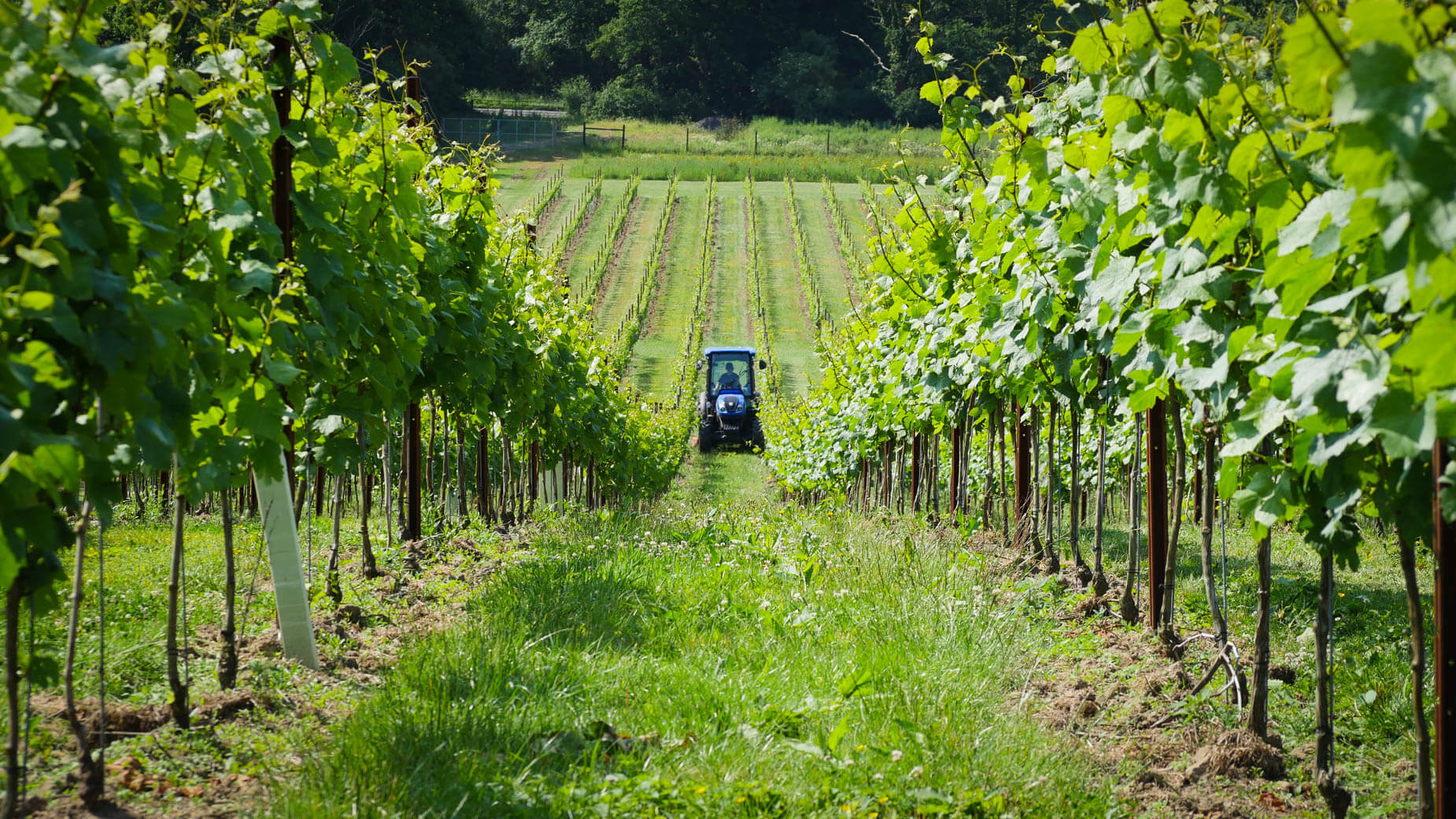
Area: 0.33 ha
Grape Variety: Chardonnay
Clone: 95
Rootstock: 3309
Vine Count: 1346 Vines
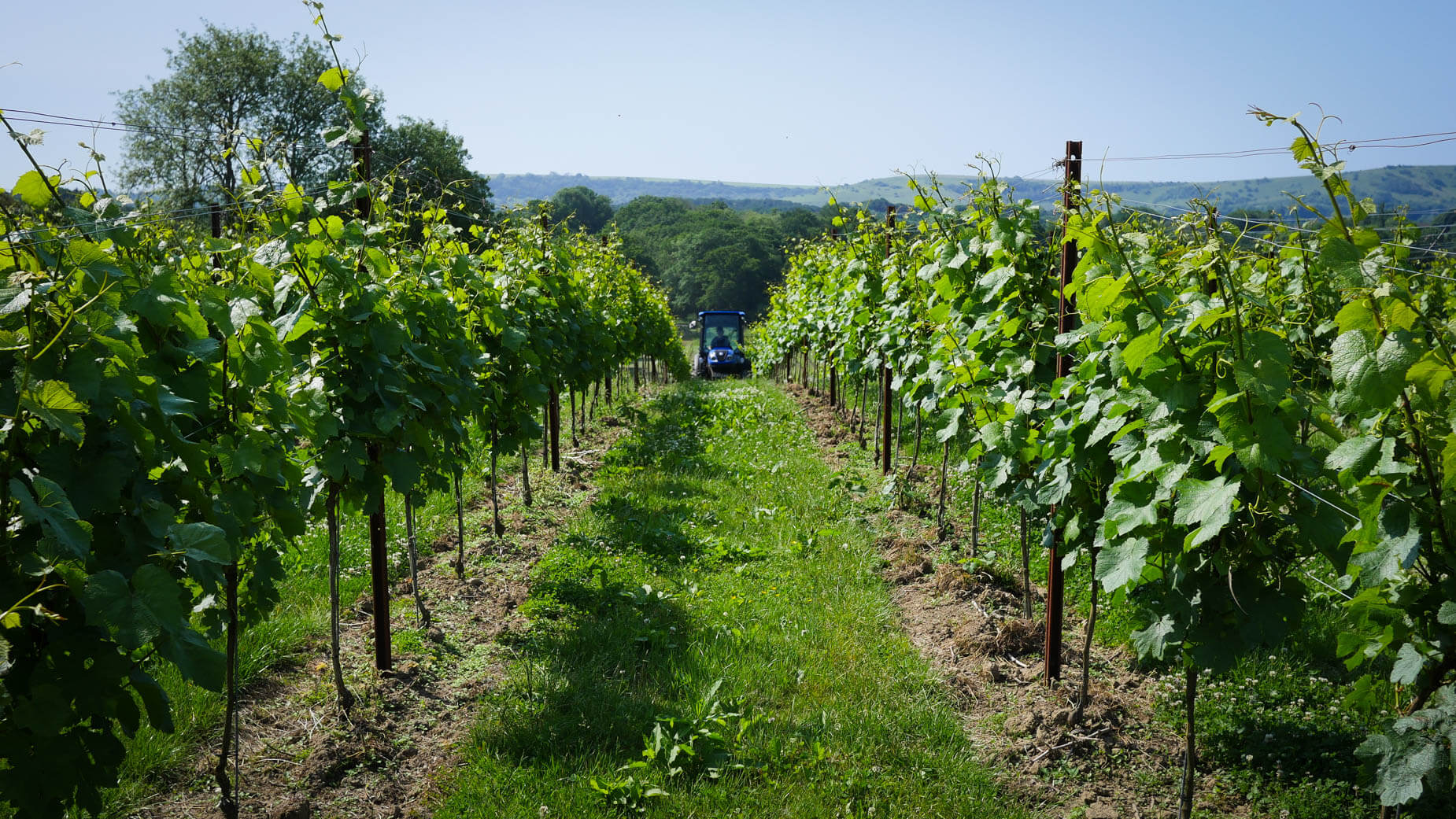
Area: 0.16 ha
Grape Variety: Chardonnay
Clone: 96
Rootstock: 3309
Vine Count: 667 Vines
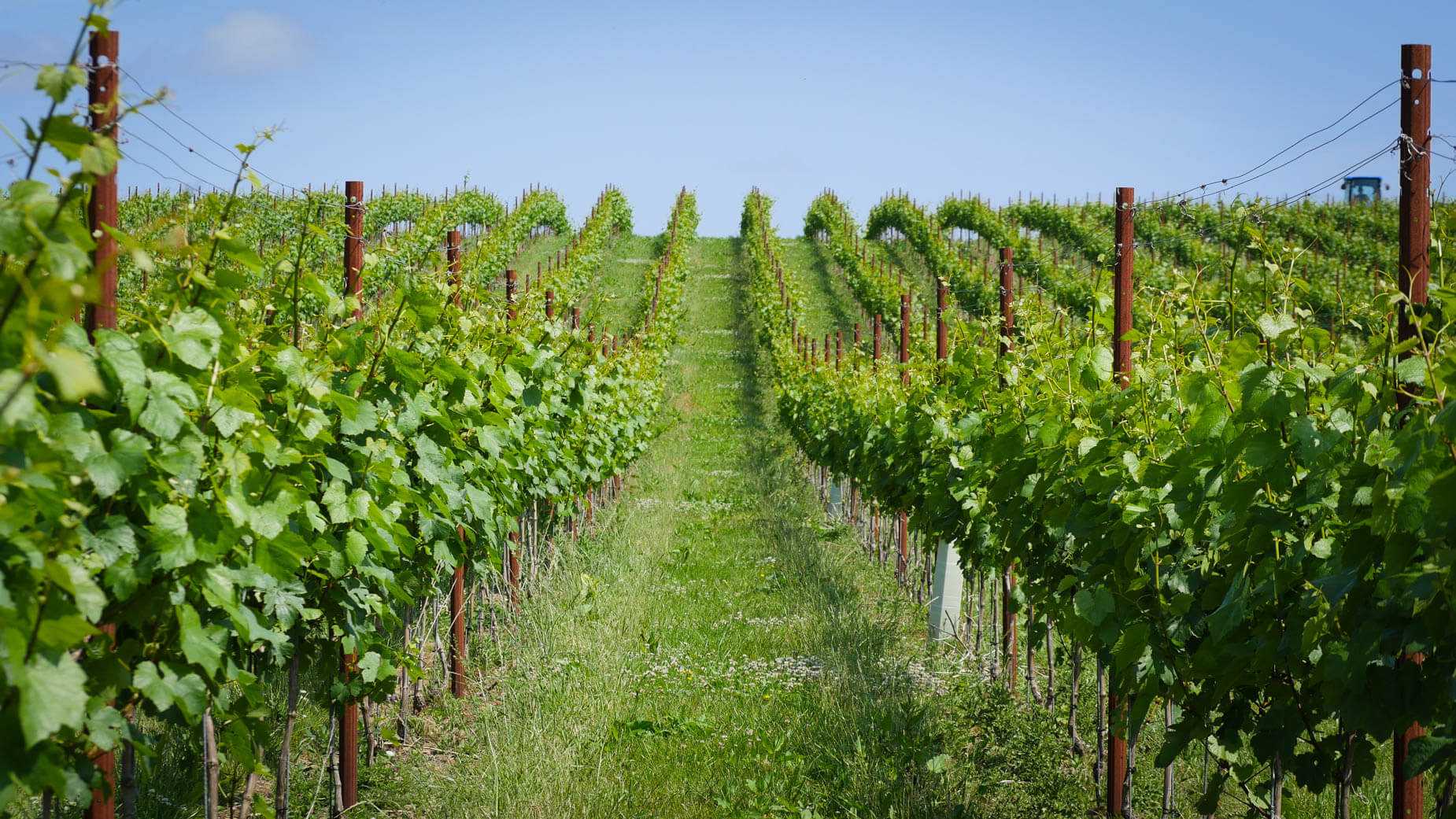
Area: 0.5 ha
Grape Variety: Chardonnay
Clone: 121
Rootstock: SO4
Vine Count: 2043 Vines
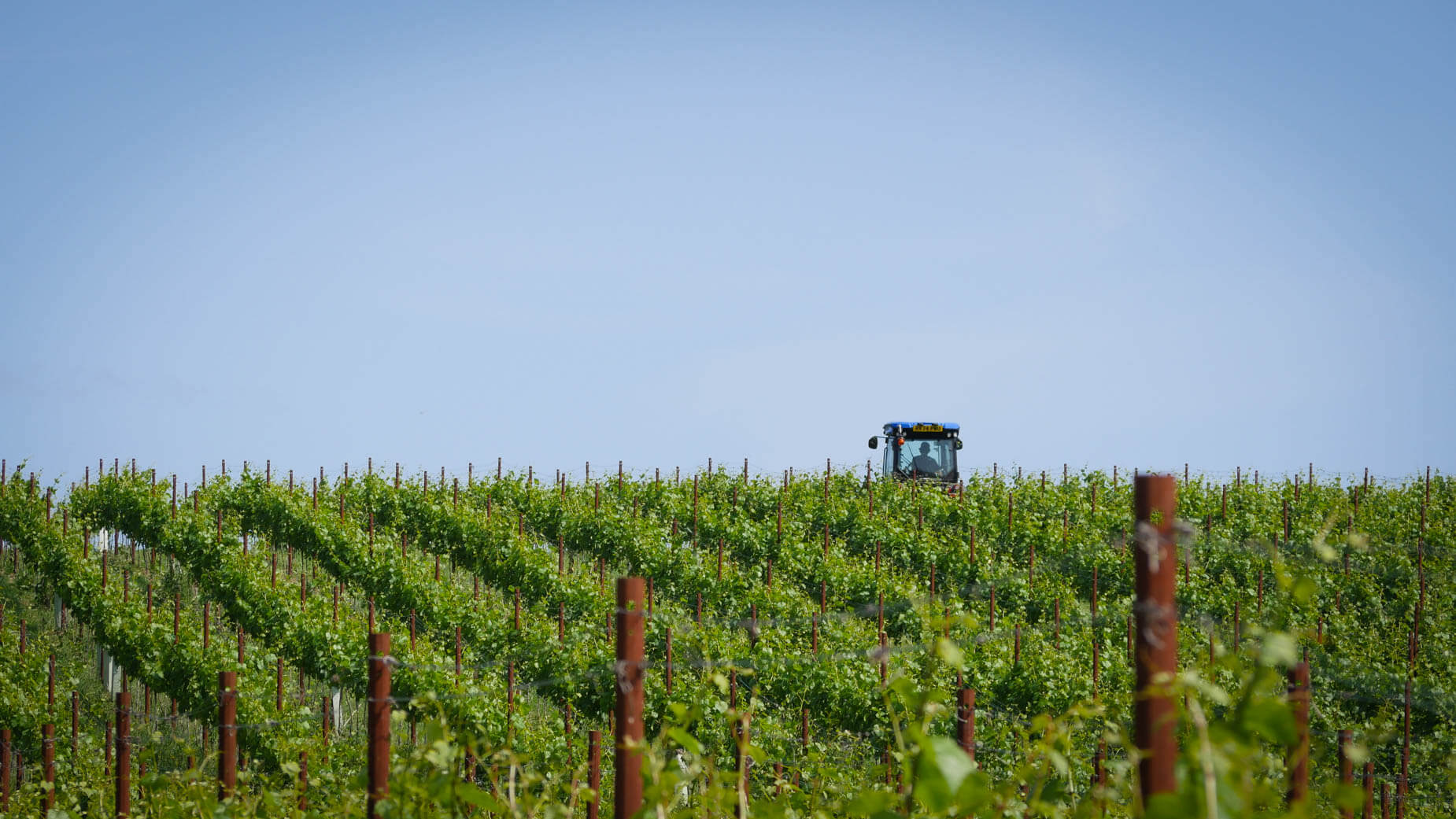
Area: 2.1 ha
Grape Variety: Chardonnay
Clone: 548
Rootstock: SO4
Vine Count: 8645 Vines
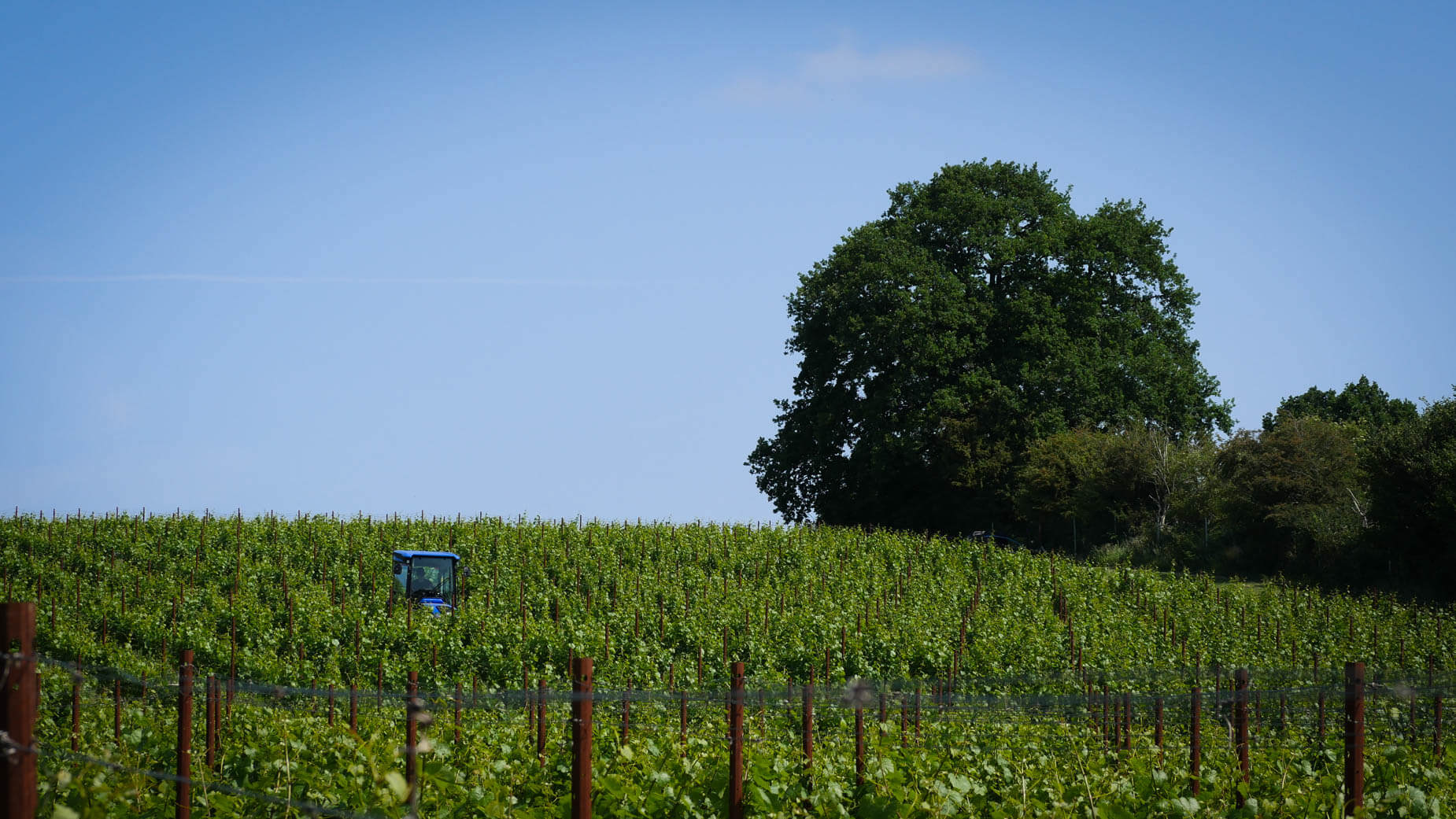
Area: 0.48 ha
Grape Variety: Chardonnay
Clone: 809
Rootstock: SO4
Vine Count: 1970 Vines
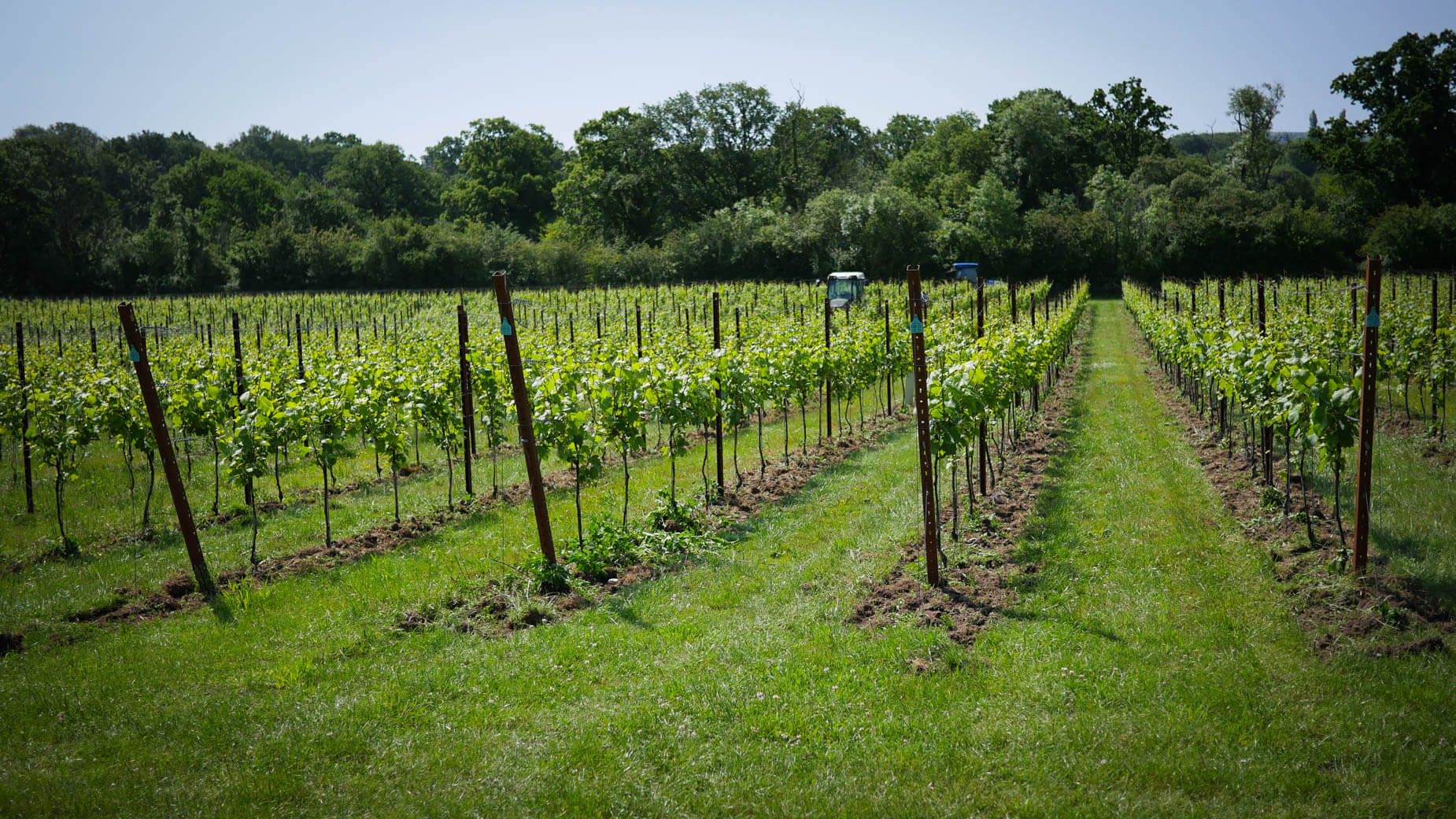
Area: 0.21 ha
Grape Variety: Pinot Gris
Clone: G1-32
Rootstock: SO4
Vine Count: 875 Vines
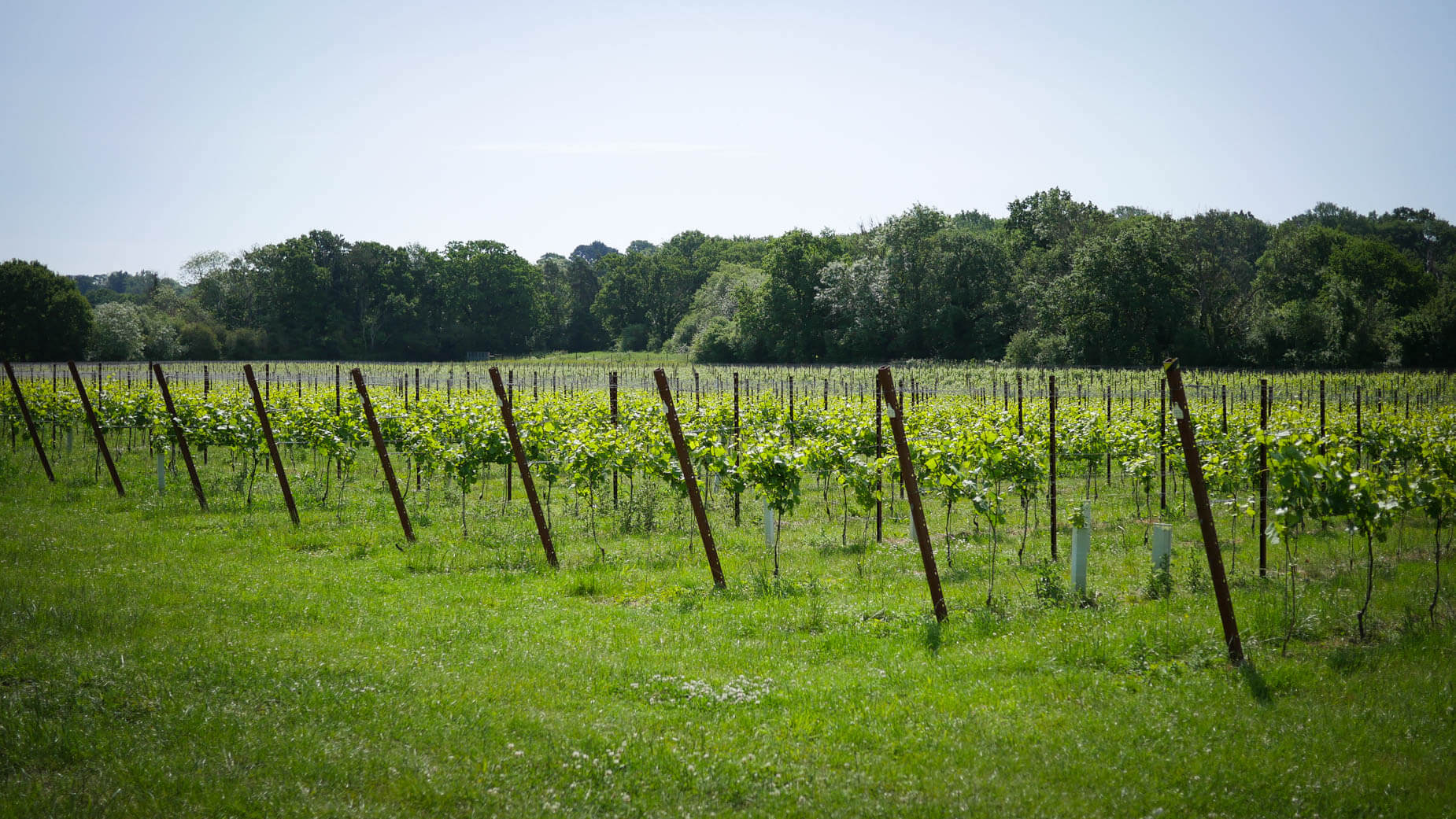
Area: 0.35 ha
Grape Variety: Pinot Gris
Clone: 457
Rootstock: SO4
Vine Count: 1442 Vines
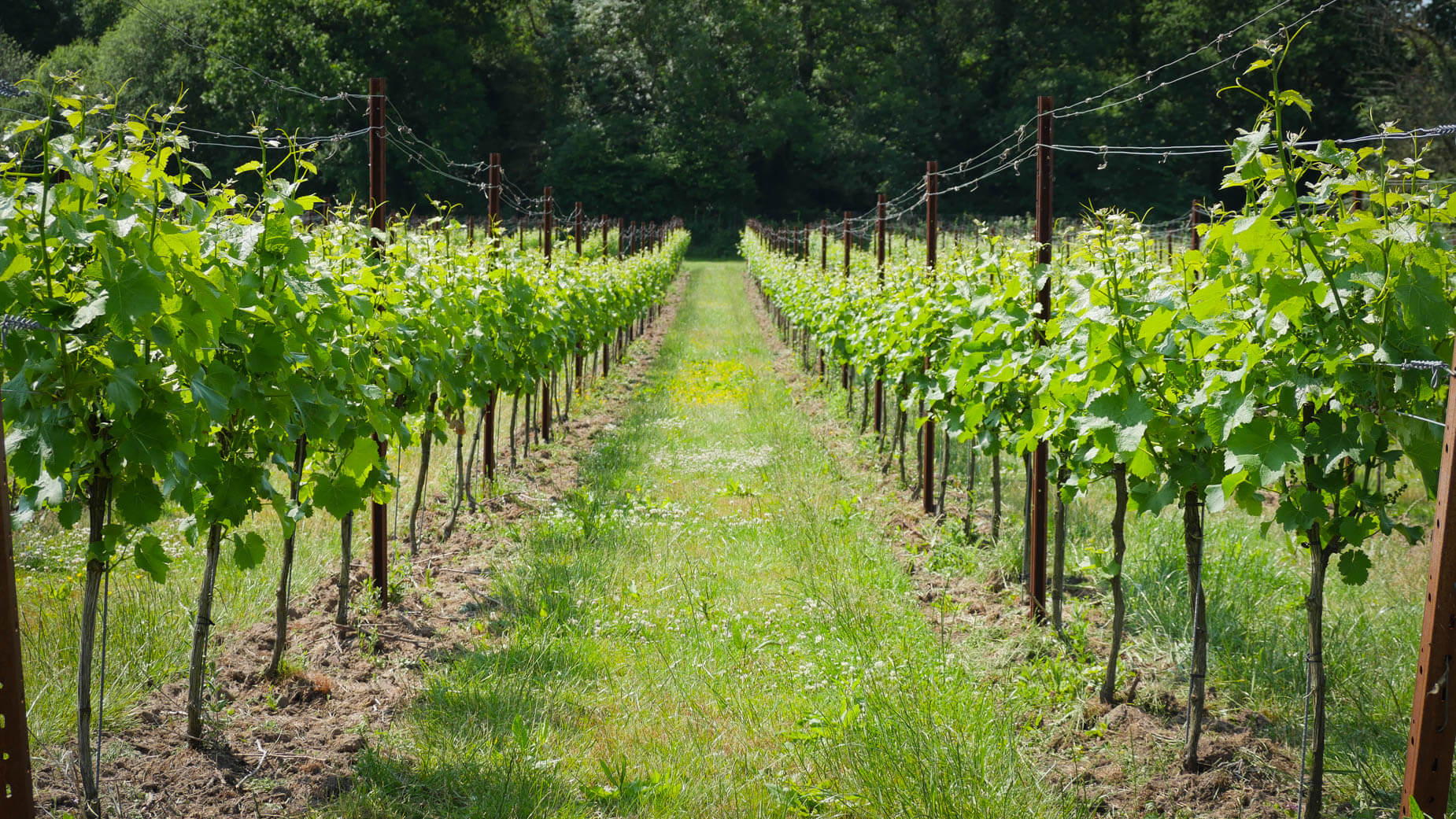
Area: 0.64 ha
Grape Variety: Pinot Gris
Clone: 514
Rootstock: Binova
Vine Count: 2601 Vines
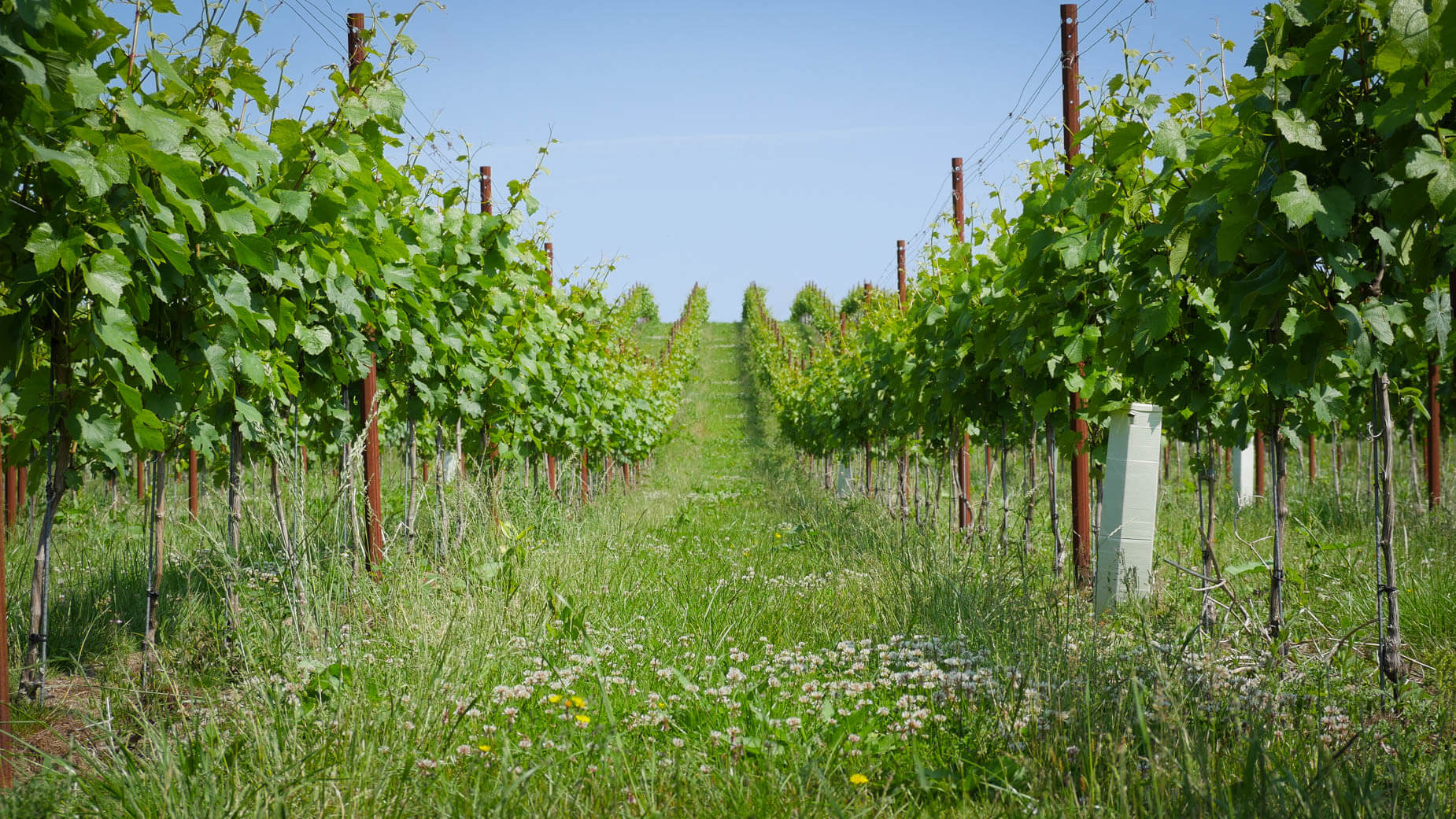
Area: 0.5 ha
Grape Variety: Sauvignon Blanc
Clone: 530
Rootstock: SO4
Vine Count: 1474 Vines
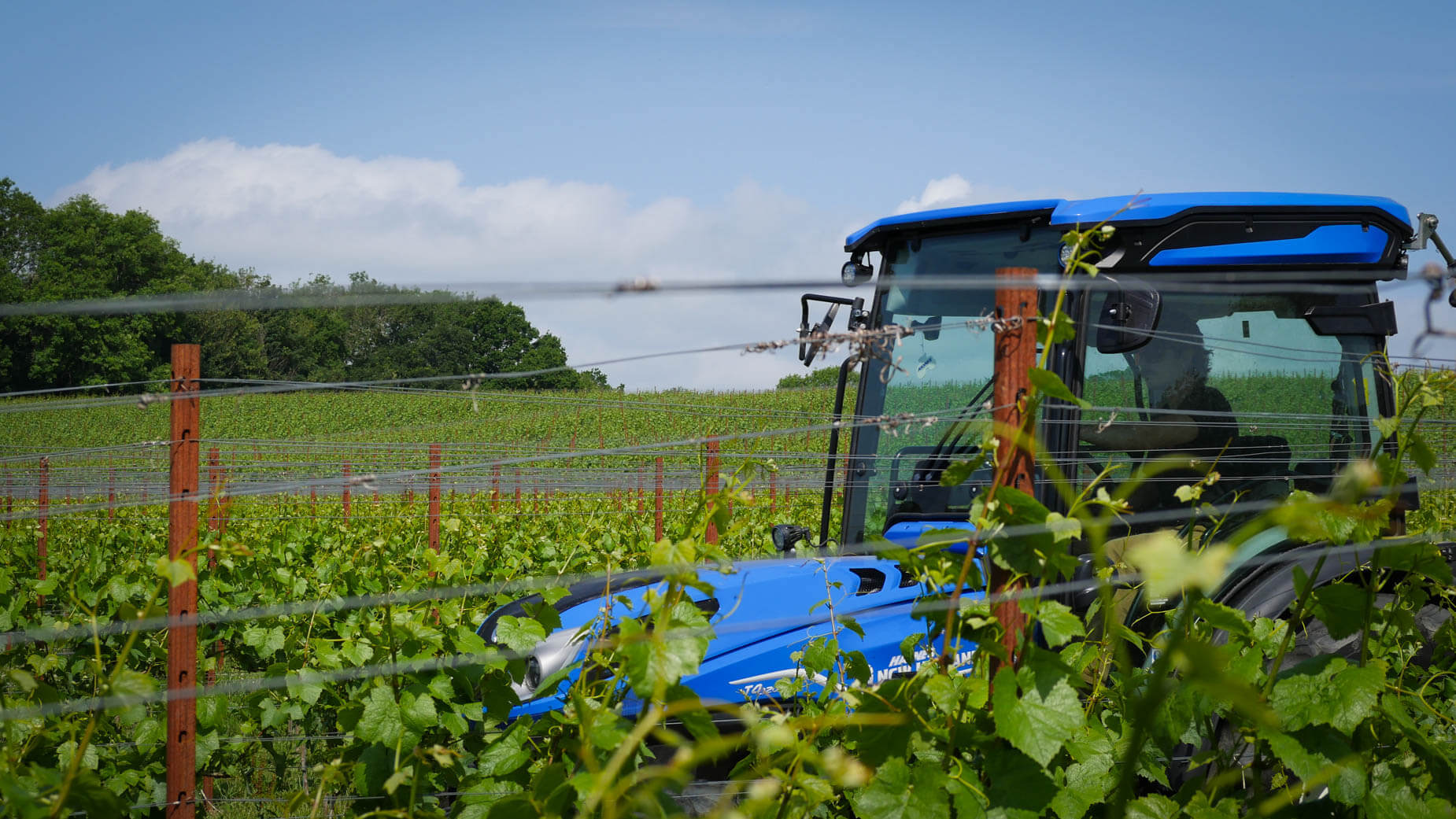
Area: 0.5 ha
Grape Variety: Sauvignon Blanc
Clone: 906
Rootstock: 101-14
Vine Count: 1494 Vines
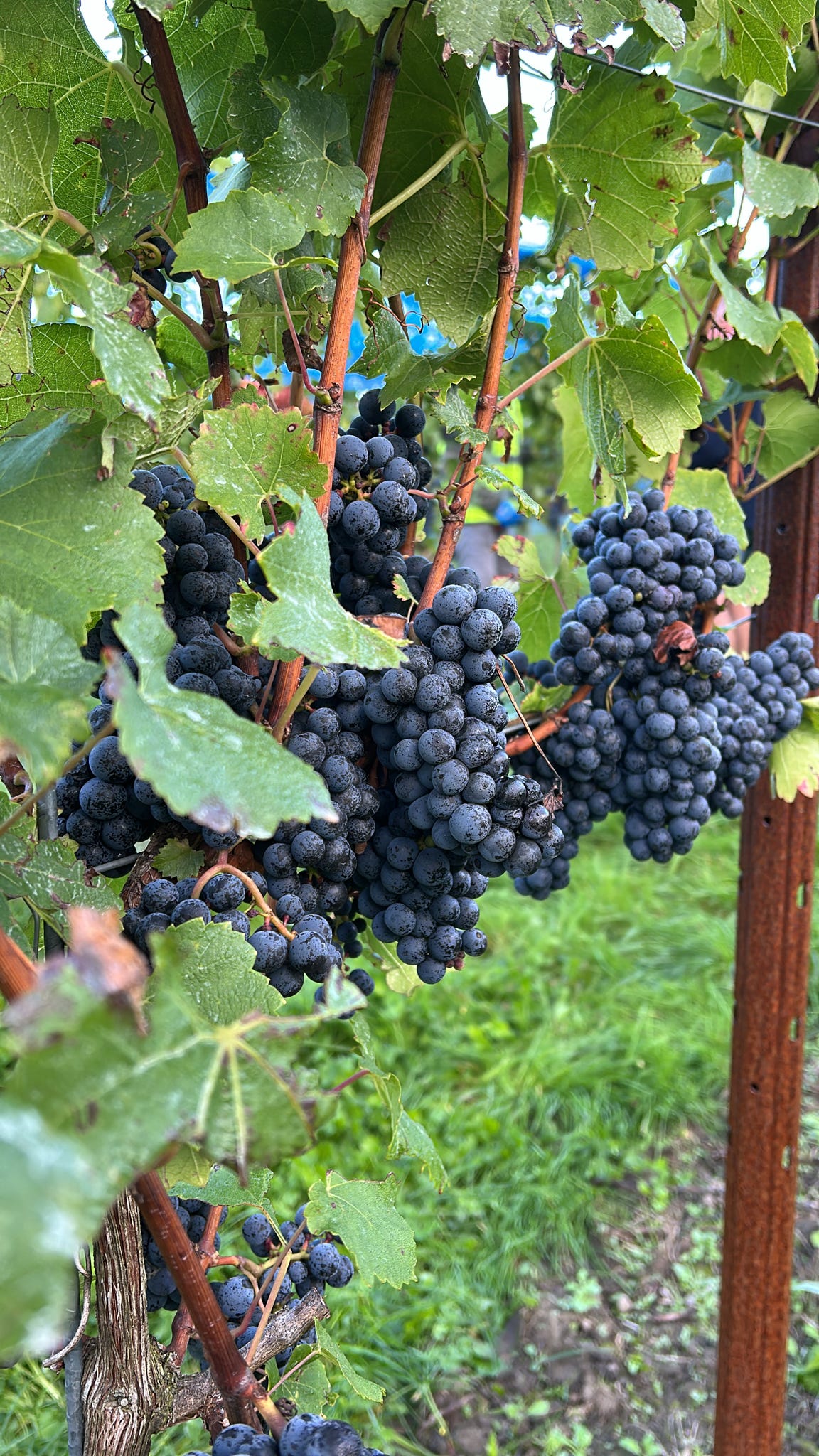
Area: 0.81 ha
Grape Variety: Cabaret Noir
Clone: -----
Rootstock: 125AA
Vine Count: 2397 Vines